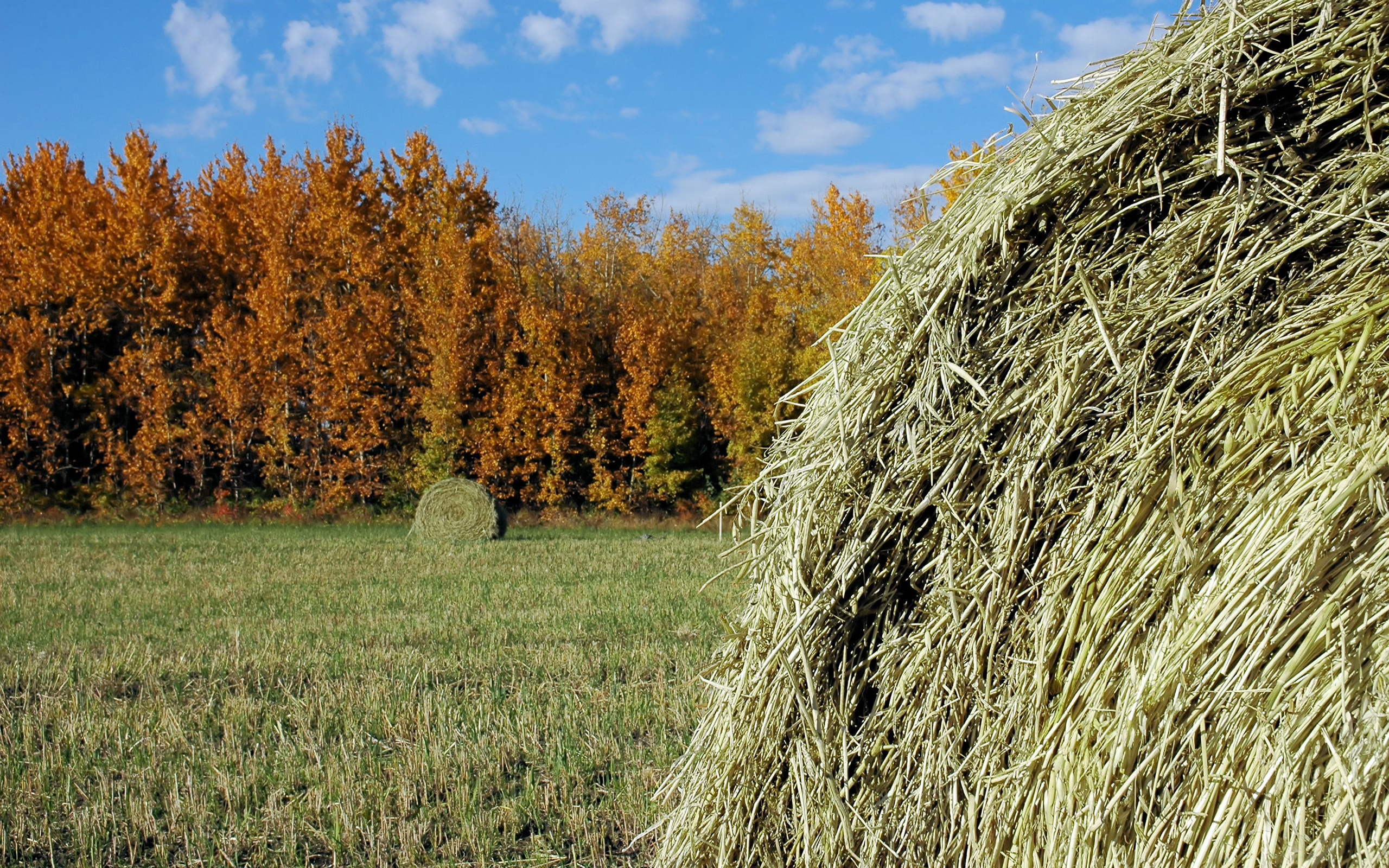
As summer winds down, Minnesota forage producers face a familiar autumn challenge—the weather. Securing high-quality forage during September and October means navigating shorter days, heavy morning dew, and cooler temperatures that slow down natural field drying. Plus, if it finally decides to rain, waiting for that perfect moisture window can ruin the nutritional value of your crop.
At Dohrmann Enterprises, we understand the unique pressures of late-season harvesting in the Upper Midwest. That is why understanding why and when to apply hay preservative is one of the most effective strategies to protect your investment, beat the autumn dampness, and extend your baling window well into fall.
Why Late-Season Baling May Benefit From Preservatives
In September and October, our Minnesota climate creates a narrow window for traditional dry hay production and can include the following challenges:
- Elevated Moisture Risks: Cooler autumn air slows down evaporation, meaning cut forage sits in the field longer.
- Mold and Heating: Baling hay with higher moisture levels without treatment triggers microbial growth. This causes heating, nutritional loss, and in some cases, fire risk.
- Leaf Loss: Waiting too long for the stems to dry completely can cause the leaves—where the bulk of the protein resides—to become brittle and shatter during baling.
When is it too late to bale hay in Minnesota? Generally, once a hard, killing frost hits and consistent freezing temperatures settle in, the grass stops growing, and the drying windows disappear, making it nearly impossible to cure standing forage safely without severe nutrient decay.
The Dohrmann Enterprises Solution: Choosing the Right Treatment
Using hay preservatives allows you to bale safely at higher moisture levels. To meet the diverse needs of growers in our climate, we offer two distinct, proven chemical approaches:
- HayGreen: Our advanced organic acid preservative formula. HayGreen actively lowers the pH of your forage to establish an environment where dangerous microbes and mold cannot replicate.
- HayGuard: Our specialized sulfur-compound treatment. HayGuard provides an alternative chemical approach to managing spoilage, targeting and limiting the growth of mold and yeast in stored forage depending on your specific harvest and storage conditions.
By treating your late-season cuttings with either HayGreen or HayGuard, you can start baling earlier in the day and continue later into the evening. To take the guesswork out of your field operations, we recommend using moisture testers featuring a bright digital display and a 6% to 40% testing range to monitor changing moisture percentages in real time. Whether you choose the pH-lowering power of HayGreen or the sulfur-based protection of HayGuard, our solutions stop mold spores from multiplying, prevent internal bale heating, and lock in the green color and fresh smell that livestock prefer. Most importantly, they save the nutrient-dense leaves, ensuring high relative feed value (RFV) to carry your herd through the winter.
Maximize Your Autumn Yield
Do not let the changing Minnesota seasons dictate the quality of your feed. With our premium treatments and reliable applicators and accessories, you can safely extend your baling window all the way until the ground freezes. The team at Dohrmann Enterprises is here to help you make the most of your fall harvest, minimize field losses, and bale with greater confidence.
Ready to see what’s next for your harvesting operation? Contact Dohrmann Enterprises today to learn how our solutions can maximize your forage harvest this fall!
Fall Hay Preservative FAQs:
What specific hay preservatives does Dohrmann Enterprises offer?
We offer our own line of hay preservatives, featuring HayGreen and HayGuard, alongside WCC Preservative. These products act as powerful fungicides to stop mold and yeast while allowing you to safely bale high-moisture hay.
What is the difference between HayGreen and HayGuard?
While both protect your forage, they use different chemical approaches. HayGreen is a 68.0% buffered propionic acid formula that lowers forage pH to stop microbial growth. HayGuard utilizes specialized sulfur compounds to provide an alternative chemical approach to managing spoilage and heating losses depending on your specific harvest and storage conditions.
What is the primary function of HayGuard?
HayGuard specifically targets and limits the growth of mold and yeast in stored forage. It provides an excellent alternative option to prevent nutrient-robbing heating losses when traditional acid treatments might not be preferred for your specific setup.
What is the maximum moisture level for baling with Dohrmann Enterprises preservatives?
Both HayGreen and HayGuard allow you to safely put up and store high-quality hay at moisture levels up to 25%.
HayGreen uses a 68.0% buffered propionic acid formula to lower the pH of your forage, establishing a highly acidic environment that prevents dangerous microbes from replicating during wet Minnesota autumns.
HayGuard uses an acid-free combination of sulfur compounds that act as natural oxygen scavengers. It eliminates trapped oxygen within the bale to halt plant cell respiration and completely stop the growth of mold and yeast spores.
Does Dohrmann Enterprises manufacture equipment for all bale types?
Yes, we build and test durable, in-house systems tailored for every operation. We manufacture specialized Small Square Baler Applicators, Round Baler Kits, and heavy-duty setups for Large Square Balers.
How do I monitor moisture levels accurately while harvesting fall hay?
You can pair your harvest workflow with a portable moisture tester from our lineup. These tools feature a 6% to 40% moisture range, a built-in calibration check, and an adjustable audible alarm to give you instant feed data in the field.
Are HayGreen and HayGuard safe to feed to horses and dairy livestock?
Yes, both preservatives are completely safe for all animals, including horses and dairy cattle. HayGreen uses a buffered organic acid formulation that mimics the propionic acid naturally produced in an equine or bovine hindgut during standard fiber digestion. This buffered formula stops mold safely while remaining significantly less corrosive to your expensive baling equipment. HayGuard uses a patented, acid-free combination of sulfur compounds that is completely odorless and non-toxic. By utilizing either treatment to eliminate mold development, you prevent the proliferation of dangerous, dusty mold spores that trigger chronic respiratory issues like heaves or hypersensitivity pneumonitis in livestock, ensuring a clean and palatable feed all winter.
Where are Dohrmann Enterprises applicator systems and preservatives manufactured?
Our family-operated corporate facility is located right in Waite Park, Minnesota. Every custom wiring harness and pump unit is proudly assembled and fluid-tested in-house to withstand the demanding, unpredictable harvest windows of the Upper Midwest.